Learn English with AI: A Beginner's Guide to Fluent Conversations
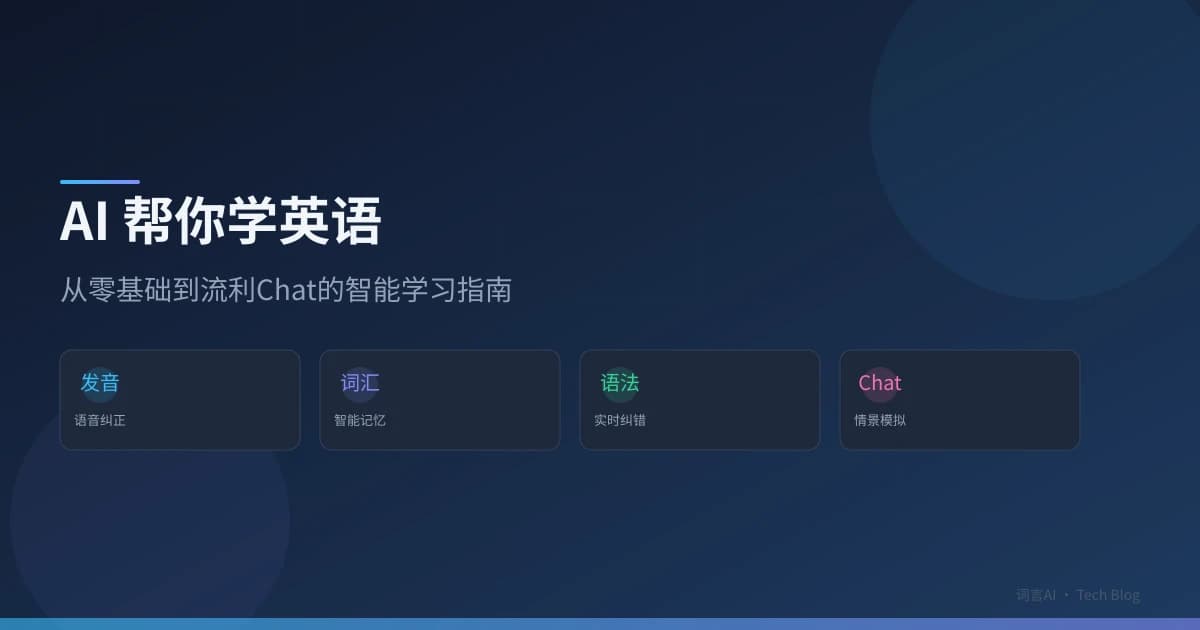
Learning English is something many people struggle with for the same reasons: no one to practice with, uncertain pronunciation, and not knowing where to start. Now, AI can become your 24/7 English learning partner. This article guides you from zero experience to effectively learning English with AI tools.
Why Learn English with AI
Traditional English learning has several pain points: hiring a tutor is expensive, there's no environment to practice speaking, and memorizing vocabulary is easily forgotten. The advantages of AI-powered English learning include:
- Available anytime — No need to schedule; you can practice conversations at 3 AM
- Zero pressure — Making mistakes won't be embarrassing; AI won't judge you
- Personalized — Adjusts difficulty and content based on your level
- Instant feedback — Grammar errors and pronunciation issues are pointed out immediately
Step 1: Choose an AI English Tool
There are many AI English learning tools available. Choose based on your needs:
General AI like ChatGPT / Claude — Most flexible; can simulate any scenario conversation, explain grammar, and review writing. Best for learners with some foundation.
Dedicated English learning apps — Apps with AI speaking features typically include pronunciation assessment and structured courses, making them ideal for complete beginners.
Chinese-friendly tools like Ciyan AI — Chinese interface, perfect for users who aren't sure how to get started.
Recommendation: If you're a complete beginner, start with a Chinese-interface tool. Once you've built a foundation, switch to English-interface AI.
Step 2: Practice Speaking with AI
Speaking is the most overlooked yet important skill. Here's how to practice with AI:
Simulated conversations — Tell the AI: "Please pretend to be a restaurant waiter; I want to practice ordering food." The AI will role-play and speak to you in English. You reply in English, and if you make mistakes, it will correct you.
Shadow reading — Have AI give you a passage in English, read it aloud, and then AI will analyze your pronunciation issues. For example: "Please check my pronunciation: 'I would like a cup of coffee'."
Free chat — Simply chat with AI in English about anything. When you encounter a word you don't know how to say, ask in Chinese how to say it.
Tip: Before each practice session, tell the AI your level. For example: "I'm a beginner; please use simple vocabulary and short sentences with me."
Step 3: Use AI to Build Vocabulary
Rote memorization is inefficient. Let AI help you learn words more smartly:
Contextual learning — Have AI place words in context. For example: "Help me write a short story using 5 travel-related words." Words with vivid imagery are easier to remember.
Spaced repetition — Have AI teach you 10 new words today, ask you about them tomorrow, and review again the day after. This spaced repetition is scientifically proven to be the most effective memorization method.
Root and affix analysis — When you encounter an unfamiliar long word, ask AI to break it down. For example, "un-" means "not" and "-able" means "able to," so "unable" means "not able to."
Step 4: Use AI for Writing and Editing
Writing is a great way to test your English level. You can have AI help you with:
Essay review — Write a paragraph in English and send it to AI. It will find grammar errors and inappropriate word choices, and provide revision suggestions.
Learning natural expressions — After writing, ask AI: "Are there more natural ways to say this?" AI will tell you how native speakers would express the same idea.
Emails and work documents — When you need to write an English email, first write what you want to say in Chinese, have AI translate it to English, then ask it to polish the wording.
Step 5: Create a Study Plan
With tools in hand, you still need a plan. Have AI create a personalized learning roadmap:
Tell AI your goal: "I want to be able to have simple conversations with foreign clients within 3 months." Then describe your current situation: "I know about 2,000 words, my grammar foundation is okay but my speaking is very weak."
AI will give you a phased study plan, including what to practice each day, how long to practice, and what methods to use. Follow the plan, review progress weekly, and adjust as needed.
Frequently Asked Questions
Is learning English with AI really effective? AI's greatest value is lowering the learning barrier and providing instant feedback. But it can't fully replace human interaction. Use AI as a daily practice tool while finding opportunities to talk with real people.
Can I start if I don't know any English? Absolutely. Start with a mix of Chinese and English, and AI will gradually guide you to use more English. The key is to open your mouth and not fear mistakes.
How long should I study each day? 15 to 30 minutes is enough. The key is consistency — practicing a little every day is far more effective than cramming for 3 hours on weekends.
There's no shortcut to learning English, but AI can make the journey much easier. Open an AI tool right now and try saying "Hello, I want to learn English" in English.
Related Articles
AI Speech to Text: Beginner's Guide to Convert Voice to Text in 3 Steps
Learn how to convert speech to text using AI tools. Perfect for meeting notes, content creation, and video subtitles. Three practical scenarios with step-by-step instructions.
TutorialsAI Local Deployment Guide: Run Large Models in 3 Steps for Free
Learn how to deploy AI models locally in just 3 steps. No coding experience needed, completely free, and your data stays private on your own computer.
TutorialsAI Shopping Decision Guide: From Price Comparison to Avoiding Pitfalls
Learn how to use AI for shopping decisions. From price comparison to avoiding pitfalls - make smarter purchasing choices with AI assistance.
Comments are not yet available, stay tuned